Egyptian Sustainable Development Forum Participates in National Jury for Smart Green Projects
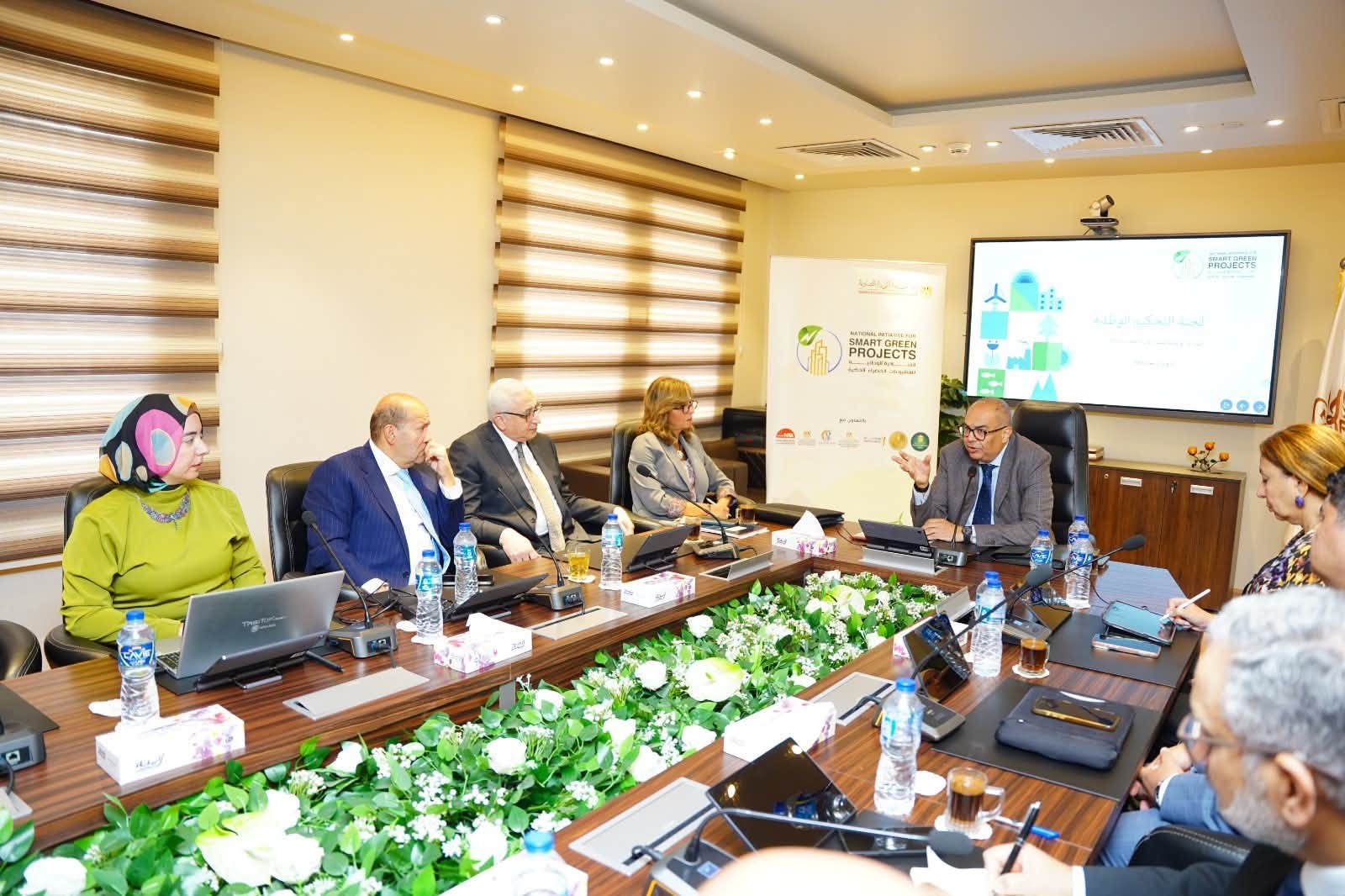
As part of efforts to strengthen institutional participation in Egypt’s transition toward a green economy and advance sustainable development pathways, the Egyptian Sustainable Development Forum participated in the work of the National Jury Committee for the fourth edition of the National Initiative for Smart Green Projects. The participation reflects the importance of civil society engagement in supporting projects that combine environmental innovation, modern technology, and sustainable development impact.
The National Jury Committee is chaired by Dr. Mahmoud Mohieldin, the United Nations Secretary-General’s Special Envoy on Financing the 2030 Sustainable Development Agenda, with the participation of committee members responsible for selecting 18 winning projects—three projects from each of the initiative’s six categories—following the completion of the evaluation and screening stages for submitted projects.
The jury stage was preceded by preparatory work involving specialists and experts from relevant ministries and institutions. The projects were assessed in accordance with the initiative’s criteria, resulting in the selection of 60 eligible projects, with 10 projects from each category, for presentation to the National Jury Committee to determine the final winners.
The initiative includes six main categories: large-scale projects, medium-sized projects, small local projects, startups, women’s empowerment projects, and non-profit community initiatives and participation projects. This broad classification provides opportunities for different economic and social sectors to contribute to sustainable development efforts.
The evaluation process is based on six main criteria, foremost among them the green component, which measures the extent to which projects contribute to the sustainable management of resources, energy efficiency, emissions and pollution reduction, improved waste management, and the application of circular economy principles.
The criteria also include the smart technology component, which assesses the use of modern technologies such as artificial intelligence, remote sensing, the Internet of Things, big data analytics, geographic information systems, and other advanced technological applications.
Additional evaluation criteria include economic feasibility and bankability, the potential for projects to scale up and be replicated, and the sustainability of their impact. The process also measures the development impact of projects on local communities based on verifiable indicators and data.
Women’s empowerment is another core criterion of the initiative, focusing on the level of women’s participation, the extent to which projects respond to their needs, and their contribution to capacity-building and strengthening women’s role in the transition toward a green economy.
The participation of the Egyptian Sustainable Development Forum, which has been a member of the National Jury Committee since its establishment, underscores the importance of strengthening civil society representation in national sustainability assessment processes and contributing to the selection of projects that offer practical solutions to environmental and climate challenges while integrating environmental, technological, economic, and social dimensions.
The initiative continues to play an important role in encouraging innovation and expanding the scope of green and smart solutions, supporting more efficient resource use, enhancing local development opportunities, and creating space for projects with strong potential for implementation and expansion, in line with Egypt’s sustainable development goals.