Series of Sessions Strengthens Local Communities’ Climate Resilience in Sohag
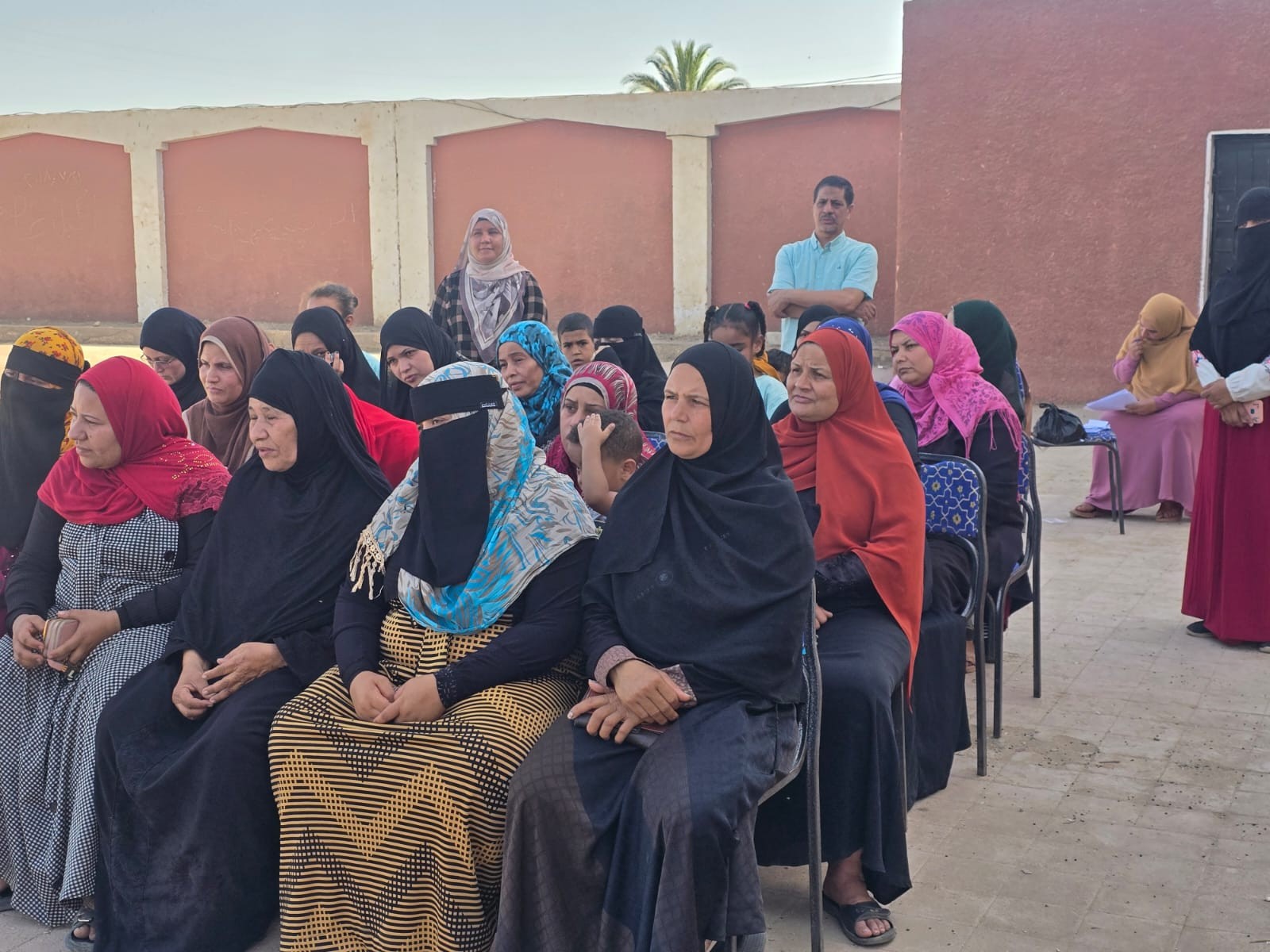
As part of the activities of the 12th National Sustainable Development Week 2026, held this year under the theme “Just and Sustainable Solutions to Strengthen Resilience,” the “Heya for Development and Family Advancement” Foundation, Coordinator of the Sohag Local Sustainable Development Forum, organized a series of awareness-raising seminars from 7 to 9 June 2026.
The seminars were implemented in partnership with the Arab Office for Youth and Environment and the Egyptian Sustainable Development Forum, with the aim of promoting community dialogue on sustainability and climate issues and supporting citizens’ participation in addressing environmental and development challenges.
The activities formed part of ongoing efforts to raise awareness of sustainable development concepts and strengthen the capacity of local communities to adapt to growing climate-related and economic challenges. They sought to contribute to building more resilient communities and achieving inclusive development that simultaneously addresses economic, social, and environmental dimensions.
The seminars emphasized that achieving sustainable development requires the adoption of equitable solutions that ensure the participation of all segments of society in the development process. Attention must be given to groups most affected by environmental and economic challenges in order to promote social justice and ensure a more balanced distribution of development opportunities and benefits.
These efforts are particularly significant considering the escalating global challenges associated with climate change and increasing pressure on natural resources, alongside growing demand for water, energy, and food. This situation underlines the need for stronger cooperation among government bodies, civil society organizations, the private sector, academic institutions, young people, and women to develop innovative and sustainable solutions capable of addressing these challenges.
The sessions sought to communicate scientific and environmental knowledge to targeted groups within the local community. They also emphasized the role of citizens as essential partners in protecting natural resources, rationalizing their consumption, and adopting more sustainable production and consumption patterns that support environmental conservation and improve quality of life.
The seminars addressed several priority issues on the sustainable development agenda, foremost among them the concept of a just energy transition. Discussions highlighted the importance of transitioning towards clean and renewable energy sources in a manner that considers the social dimension and ensures that all segments of society benefit from the opportunities created by the green economy. The role of renewable energy in reducing emissions, strengthening energy security, and creating new employment opportunities was also emphasized.
The seminars also discussed water security as one of the most significant strategic challenges facing development efforts, particularly considering limited water resources and the impacts of climate change. Participants stressed the importance of integrated water resources management, promoting a culture of responsible water consumption, and utilizing modern technologies to improve water-use efficiency, especially in the agricultural sector, which represents a fundamental pillar of food security and rural development.
The discussions further addressed the growing impacts of climate change on ecosystems, agricultural production, and food security, including the pressures caused by rising temperatures and the increasing frequency of extreme weather events. National efforts undertaken within the framework of Egypt Vision 2030 and the National Climate Change Strategy 2050 were also reviewed, particularly those aimed at strengthening adaptation to climate impacts, reducing emissions, and supporting low-carbon development.
In this context, the seminars highlighted the importance of climate-smart agriculture as a practical solution to food-security challenges. This includes expanding the use of crop varieties that are more tolerant of changing climatic conditions, developing modern irrigation systems, improving soil management, and reducing losses across food-production chains.
Participants also discussed the growing role of modern technology and digital transformation, particularly artificial intelligence applications, in supporting sustainable development efforts. These technologies can contribute to improving water resources management, developing early-warning systems for climate-related risks, analyzing agricultural data, and supporting planning and decision-making processes. This would enhance resource-use efficiency and strengthen communities’ capacity to adapt to future changes.
The activities emphasized that the success of sustainable development efforts depends not only on technical solutions but, fundamentally, on building broad public awareness and promoting the active participation of all stakeholders, particularly young people and women. Both groups represent key drivers of positive change through innovation, green entrepreneurship, and community initiatives capable of providing local solutions to environmental and economic challenges.
At the conclusion of the seminars, participants stressed the importance of continuing awareness-raising and dialogue-based initiatives that facilitate the exchange of knowledge and experience among citizens, experts, and civil society organizations. Such initiatives contribute to embedding a culture of sustainability and connecting national strategies with the needs of local communities, ultimately advancing a more inclusive, equitable, and resilient development model.
The sessions concluded with several recommendations, including expanding environmental and climate-awareness programs and community capacity-building initiatives, with a particular focus on young people and women as key partners in achieving the Sustainable Development Goals.
The recommendations also called for supporting the application of modern technologies and artificial intelligence in the management of water, agriculture, and energy to improve resource-use efficiency and strengthen climate-adaptation capacity. In addition, participants recommended advancing the concept of a just transition towards a green economy by providing training and skills-development programs and creating new employment opportunities that ensure all segments of society benefit from the development and economic transformations associated with the sustainability pathway.